Opis
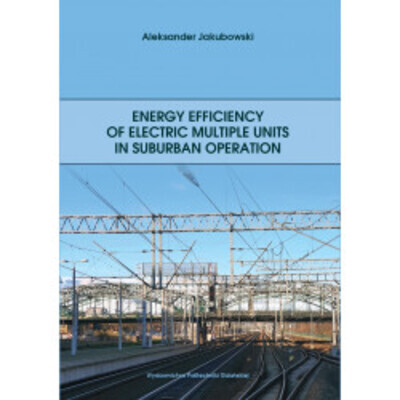
Energy efficiency of electric multiple units in suburban operation
Autor: Aleksander Jakubowski
Wydawnictwo Politechniki Gdańskiej
This monograph presents approach to analysis of energy efficiency of a suburban rail network, using novel models developed on the Matlab/Simulink basis. Necessary features and requirements for such models were determined through in-depth review of the source literature in all applicable fields: electrified transportation systems, electric multiple units construction, vehicle drivetrains and finally, existing simulation methods. Existing and applied methods for improvement energy efficiency of electrified transportation were identified.
Conducted research demonstrated that implementing model structure inspired by industrial communication networks improves model scalability and versatility, as it was used for two different electrified urban transport systems, with different power supply layouts. Moreover, proposed approach to energy consumption optimization, based on trackside signs and manageable by human driver was shown to improve energy efficiency of the whole system. This work also includes implementation of passenger flow and variable velocity profiles, which allowed for improvement of calculation accuracy.
**********************************************************************
Monografia porusza tematykę analizy energetycznej systemu szybkiej kolei miejskiej przy wykorzystaniu nowej generacji modeli bazujących na środowisku Matlab/Simulink. Niezbędne cechy i wymagania dla modelu zostały oparte na przeglądzie literatury dotykającej tematyki zelektryfikowanych systemów transportowych, budowy elektrycznych zespołów trakcyjnych oraz ich układów napędowych oraz istniejących metod symulacyjnych. Zidentyfikowano istniejące oraz stosowane sposoby zwiększenia efektywności energetycznej transportu zelektryfikowanego.
Na podstawie przeprowadzonych badań wykazano, że modele o strukturze wzorowanej na magistrali danych zwiększają skalowalność oraz wszechstronność programu, który był użyty w analizie dwóch różnych zelektryfikowanych miejskich systemów transportowych, o różnej strukturze układu zasilania. Ponadto, zaproponowana metoda optymalizacji energetycznej, wykonalna przez człowieka przy użyciu znaków przytorowych pozwala na poprawę efektywności energetycznej systemu transportowego. Rozprawa omawia również implementację potoków pasażerskich oraz zmienności profili prędkości, co zwiększa dokładność obliczeń.
Contents
Symbols and abbreviations … 5
1. Introduction … 8
1.1. Basis for the analysis .. 8
1.2. Research theses …. 10
1.3. Dissertation objectives .. 11
1.4. Scope of the research … 11
2. Energy consumption in suburban railway systems .. 13
2.1. Suburban railway system . 13
2.1.1. Electrification system .. 13
2.1.2. Electric multiple units .. 17
2.1.3. Passenger service . 19
2.2. Determinants of energy consumption … 19
2.2.1. Electrical drivetrain . 20
2.2.2. Losses in drivetrain components .25
2.2.3. Auxiliary systems .. 28
2.2.4. Energy storages … 29
2.2.5. Driving technique … 31
2.3. Existing simulation models …34
2.4. Summary of literature review .. 38
3. General design of transport system model . 39
3.1. Programming environment .. 39
3.2. Proposed structure and data handling … 40
3.3. Vehicle motion dynamics .. 46
3.3.1. Motive force calculation … 47
3.3.2. Motion resistance … 51
3.3.3. Electrical system of the vehicle … 52
3.3.4. Schedule setting .. 55
3.4. Traction power supply … 58
3.4.1. Power supply model architecture . 58
3.4.2. Traction substations and feeders .. 59
3.4.3. Catenary .59
4. Model verification .. 64
4.1. Movement dynamics – single vehicle .. 64
4.2. Transportation system – current and energy . 66
5. Identification of transport system operating conditions . 74
5.1. Assumed bounds of transportation system …. 74
5.1.1. Rolling stock …. 74
5.1.2. Considered route .. 76
5.2. In–depth analysis of velocity profiles … 79
5.2.1. Movement dynamics analysis … 80
5.2.2. Movement phases vs. distance .. 82
5.2.3. Cruising velocity .. 97
5.3. Reference velocity profiles … 98
6. Energy efficiency analysis – operation in the current state …. 103
6.1. Energy efficiency – vehicles …. 105
6.2. Catenary .. 113
6.3. Substations and feeders . 117
6.4. System total .. 122
7. Proposed optimization method .. 126
7.1. Methods of optimization in electrified transport systems . 127
7.2. Proposed optimization approach . 128
7.3. Optimized velocity profiles … 132
7.4. Analysis of energy efficiency improvement .. 134
7.4.1. Optimization results – current power supply structure ..134
7.4.2. Energy storage implementation ..141
7.5. Optimization – results summary .. 145
8. Conclusions and further work …. 148
Appendix 1 – Optimized velocity profiles data . 152
References … 156
Abstracts …. 169



Opinie
Na razie nie ma opinii o produkcie.